-
Master Grounding and Centering Techniques for Difficult Conversations

This post is part of the Difficult Conversations series. Start from the beginning [here]. You are in the conversation now. You notice your heart racing. Are you becoming anxious? Defensive? angry? Do you feel like you’re about to start crying and it will be impossible to talk through the tears? Do you feel like your…
-
Considering the Setting and Timing of a Difficult Conversation

This post is part of the Difficult Conversations series. Start from the beginning [here]. Let’s talk about logistics. The how, when, and where to have the conversation. Below we will discuss mode, setting, and timing considerations. Mode. Mode is what modality you are using to hold the conversation. Typically and ideally the mode for a…
-
Another method to start a difficult conversation.
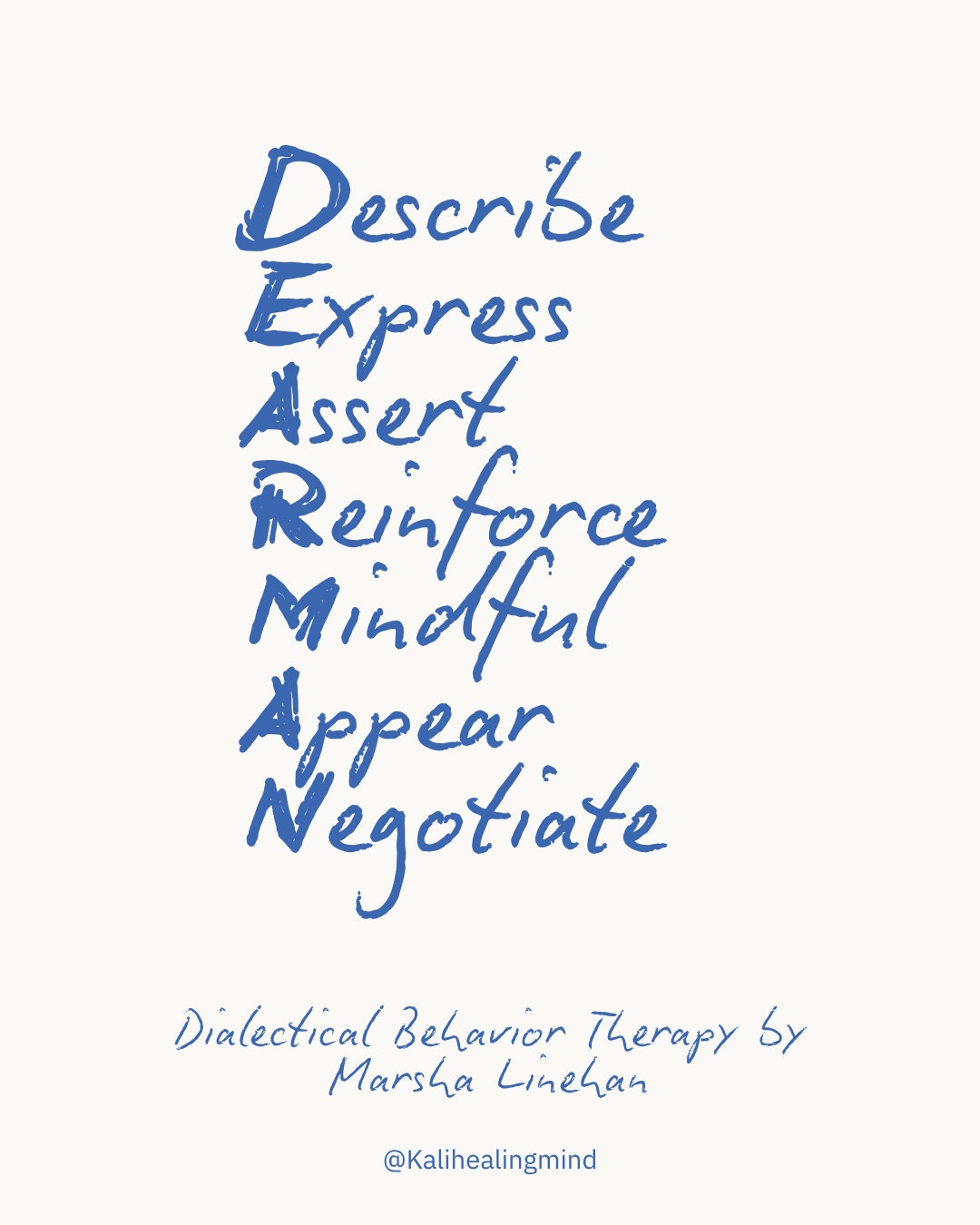
This post is part of the Difficult Conversations series. Start from the beginning [here]. We are going to talk about the acronym DEAR MAN. The acronym comes from a type of therapy called Dialectical Behavior Therapy also known as DBT. DBT was researched and developed by Marsha Linehan. DBT includes psychotherapy (talk therapy) and skills…
-
Starting Meaningful Conversations: A Practical Formula

In this week’s blog we apply the previous weeks content to an easy formula to start the conversation.
-
Identifying Core Values in Difficult Conversations

Narrowing down the issue and identifying your values will help you get what you want in a difficult or courageous conversation.
-
Difficult Conversations: How Your Feelings Shape Your Narrative

Looking at the story we are telling ourselves and checking the facts can help us regulate our emotions and act in ways that align with our values and what we want.
-
Mastering Your Emotions for Difficult Conversations: Recognizing and Processing Feelings

This post is part of the Difficult Conversations series. Start from the beginning [here]. It’s important when feelings come up, especially difficult ones, that we take the effort to own them. If we don’t own our feelings, we may mistakenly put them onto someone else. This, in the psych world, is what we lovingly call…
-
Understanding Yourself in a Difficult Conversation

To address difficult topics, we must first turn inward rather than blaming others. By examining our emotions, the narratives we construct, and the facts of the situation, we can clarify the real issues at hand. This self-reflection helps ensure our actions align with our true values and desires.
-
Mastering Difficult Conversations: A Complete Guide

This week marks the start of a blog series on difficult conversations, highlighting their importance in personal growth and relationships. Effective communication allows all parties to feel heard and create actionable plans. Upcoming posts will explore how to approach these challenging discussions, aiming for resolution and understanding.
-
The Power of Validation in Human Connection

Validation is essential for fostering connection, as it reassures individuals that their experiences are shared and real. It involves recognizing the truth in someone’s perspective without necessarily agreeing with them. Effective listening and validation enable social beings to feel less alone and understood in their emotional expressions.
-
Understanding Personal Boundaries in Psychology

Healthy personal boundaries distinguish individual identities and facilitate connections. They should be flexible yet firm, enabling adaptability without fostering resentment. Setting limits involves taking action based on personal standards rather than controlling others’ behaviors. For example, calmly stating when a discussion can resume demonstrates effective boundary setting.
-
Understanding Co-dependency in Relationships

Co-dependency shows up in our relationships when we don’t know how to meet our own needs.
-
Unlocking the Benefits of Meditation: A Beginner’s Journey

Meditation is widely praised, yet the author initially struggled to grasp its benefits. Through deeper exploration, they learned that meditation involves being a detached observer of thoughts and feelings, rather than trying to empty the mind. This perspective shift has brought newfound peace and improved their response to daily life challenges.
-
What You Need to Know About Psychosis

Psychosis, characterized by hallucinations and delusions, often stems from various underlying conditions such as drugs, schizophrenia, or dementia. Its lack of insight complicates recognition, leading to delayed treatment, which worsens outcomes. With an incidence comparable to car accidents, awareness and education about psychosis are essential for better understanding and intervention.
-
Is it just mom brain? Or is it something else?

New mothers often experience overwhelming fatigue and “mom brain,” which may be linked to iron deficiency, affecting one in three women of reproductive age. Symptoms can include attention issues similar to ADHD. It’s essential to consider iron levels, especially for those with heavy periods or after childbirth, as deficiency can have broader effects beyond anemia.

Kali Healing Mind
Exploring the transformational art and science of healing